


As a trusted BSP hose fitting supplier, I often encounter questions from customers regarding the compatibility of BSP hose fittings with metal hoses. This topic is crucial as it directly impacts the efficiency, safety, and longevity of hydraulic systems. In this blog post, I'll delve into the technical aspects of BSP hose fittings and metal hoses, exploring whether they can be used together effectively.
Understanding BSP Hose Fittings
British Standard Pipe (BSP) is a set of technical standards for screw threads that has been widely used for over a century, primarily in the United Kingdom and other Commonwealth countries. BSP fittings come in two main types: BSPP (British Standard Pipe Parallel) and BSPT (British Standard Pipe Taper).
BSPP fittings have parallel threads and rely on a gasket or O - ring to create a seal. These fittings are commonly used in low - to medium - pressure applications. On the other hand, BSPT fittings have tapered threads, which form a seal by deforming the threads themselves when tightened. They are suitable for higher - pressure applications.
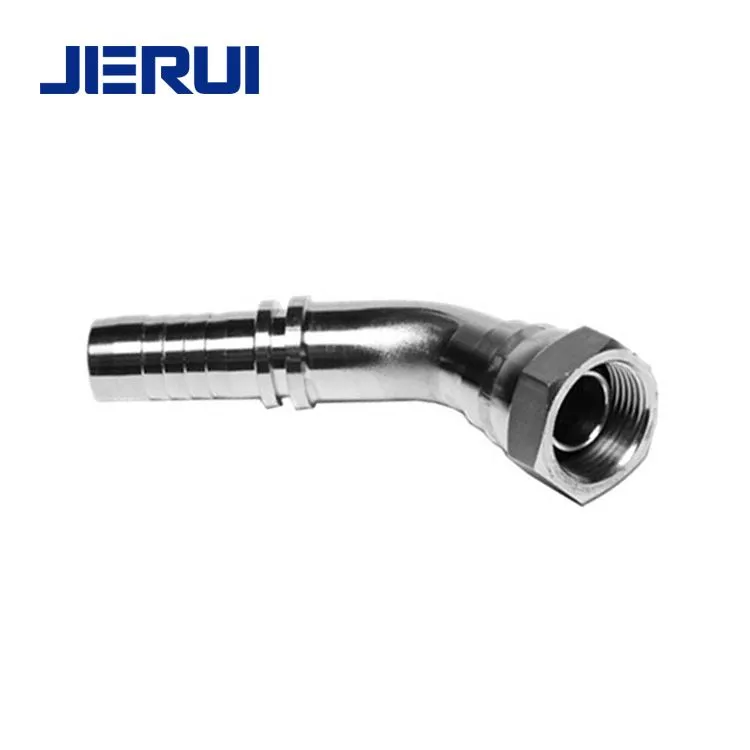

Our company offers a wide range of BSP hose fittings, including 45° Female 60° Cone Inserts BSP, 90° Female 60° Cone Inserts BSP, and Taper Male Inserts BSPT. These fittings are manufactured to high - quality standards, ensuring reliable performance in various hydraulic systems.
Characteristics of Metal Hoses
Metal hoses are flexible conduits made from metallic materials such as stainless steel, brass, or copper. They are known for their excellent durability, high - temperature resistance, and ability to withstand harsh environments. Metal hoses are commonly used in applications where flexibility, corrosion resistance, and high - pressure tolerance are required, such as in automotive, aerospace, and industrial machinery.
The construction of metal hoses typically consists of an inner tube, a braided or corrugated outer layer, and end fittings. The inner tube provides a smooth path for the fluid or gas, while the outer layer adds strength and protection. The end fittings are used to connect the hose to other components in the system.
Compatibility of BSP Hose Fittings with Metal Hoses
The compatibility of BSP hose fittings with metal hoses depends on several factors, including the type of BSP fitting, the material of the metal hose, and the application requirements.
Thread Compatibility
One of the primary considerations is the thread compatibility between the BSP fitting and the end fitting of the metal hose. If the threads do not match, it will be impossible to create a proper connection, leading to leaks and potential system failures.
For BSPP fittings, the parallel threads need to mate with a corresponding parallel - threaded end fitting on the metal hose. A gasket or O - ring must be used to ensure a tight seal. BSPT fittings, with their tapered threads, require a tapered - threaded end fitting on the metal hose. The tapered threads will deform slightly when tightened, creating a seal without the need for additional gaskets in most cases.
Material Compatibility
The material of the BSP fitting and the metal hose must also be compatible. For example, if the metal hose is made of stainless steel, the BSP fitting should also be made of a material that is compatible with stainless steel to prevent galvanic corrosion. Galvanic corrosion occurs when two different metals are in contact in the presence of an electrolyte, such as water or hydraulic fluid. This can lead to the deterioration of the materials and ultimately the failure of the connection.
Pressure and Temperature Compatibility
The pressure and temperature ratings of the BSP fitting and the metal hose must be suitable for the application. If the pressure or temperature exceeds the rated capacity of either the fitting or the hose, it can cause leaks, bursts, or other safety hazards.
Advantages of Using BSP Hose Fittings with Metal Hoses
When properly matched, using BSP hose fittings with metal hoses offers several advantages:
Reliable Sealing
BSP fittings, especially BSPT fittings, provide a reliable sealing mechanism. The tapered threads of BSPT fittings can create a tight seal even under high - pressure conditions, reducing the risk of leaks.
Durability
Both BSP fittings and metal hoses are known for their durability. The combination of these two components can result in a long - lasting connection that can withstand harsh operating conditions, such as high temperatures, vibrations, and chemical exposure.
Flexibility
Metal hoses offer flexibility, allowing for easy installation in tight spaces or applications where movement is required. BSP fittings can be used to connect these flexible hoses to other components in the system, providing a flexible and reliable connection.
Installation Considerations
Proper installation is crucial when using BSP hose fittings with metal hoses. Here are some key installation tips:
Thread Preparation
Before installation, the threads of both the BSP fitting and the metal hose end fitting should be cleaned and inspected for any damage or debris. If necessary, a thread sealant can be applied to BSPP fittings to enhance the sealing performance.
Tightening Torque
It is important to use the correct tightening torque when installing BSP fittings. Over - tightening can damage the threads, while under - tightening can result in leaks. Refer to the manufacturer's specifications for the recommended tightening torque.
Alignment
Ensure that the BSP fitting and the metal hose are properly aligned during installation. Misalignment can cause stress on the connection, leading to premature failure.
Conclusion
In conclusion, BSP hose fittings can be used with metal hoses, provided that the thread, material, pressure, and temperature compatibility are carefully considered. When properly matched and installed, the combination of BSP hose fittings and metal hoses offers a reliable, durable, and flexible solution for various hydraulic applications.
If you are interested in purchasing BSP hose fittings for your metal hose applications, I encourage you to contact us for more information. Our team of experts can help you select the right fittings based on your specific requirements and ensure a successful installation.
References
- "Hydraulic Hose Fittings Handbook" - Industry - standard handbook on hydraulic hose fittings
- Manufacturer's specifications for BSP hose fittings and metal hoses