


Determining the compatibility of stainless steel adapters with other components is a crucial aspect when it comes to various industrial and commercial applications. As a stainless steel adapters supplier, I understand the significance of ensuring seamless integration between our products and the components they are meant to work with. In this blog, I will delve into the key factors to consider when assessing compatibility and provide practical tips to help you make informed decisions.
1. Thread Compatibility
One of the most fundamental aspects of compatibility is the thread type. Stainless steel adapters come with various thread standards, each designed for specific applications and regions. Three common thread types in our product range are BSP (British Standard Pipe), NPT (National Pipe Tapered), and JIC (Joint Industrial Council).
-
BSP Thread Adapter Stainless: BSP threads are widely used in the United Kingdom and many Commonwealth countries. They can be either parallel (BSPP) or tapered (BSPT). Parallel threads are commonly used for sealing with an O - ring or a gasket, while tapered threads create a seal by deforming the threads themselves. If you are working on a project that follows British or European standards, you may need to consider BSP Thread Adapter Stainless. It is essential to match both the thread size and the thread type (parallel or tapered) when connecting to other components.
-
NPT Thread Adaptor Stainless: NPT threads are prevalent in North America. They are tapered threads, and the standard requires a sealing compound to create a leak - tight joint. When using an NPT Thread Adaptor Stainless, make sure to check the thread size and the taper angle. Using a mismatched thread can lead to leaks, which can be dangerous in applications involving fluids or gases under pressure.
-
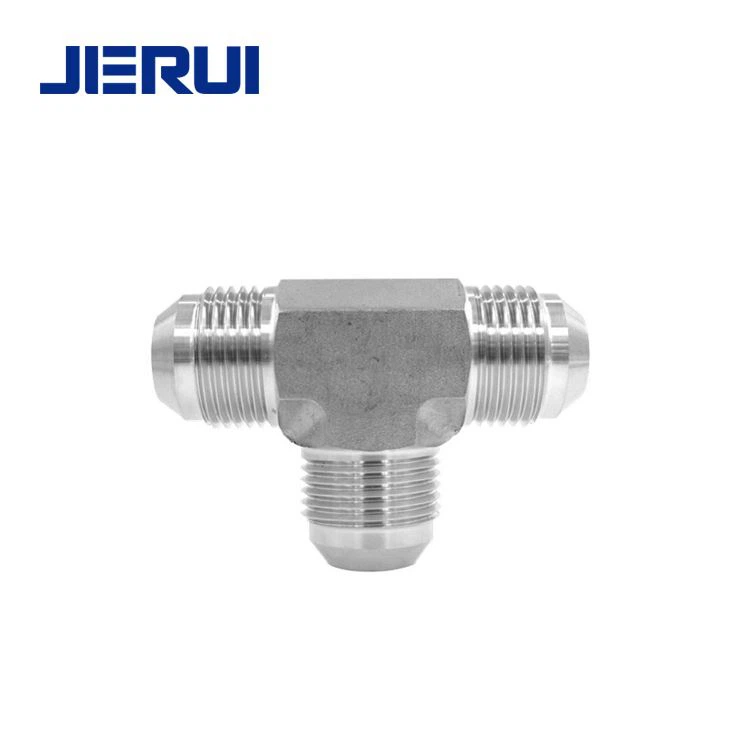
JIC Thread Adapter Stainless: JIC threads are commonly used in hydraulic systems. They have a 37 - degree flare seat, which provides a reliable seal. If your application involves hydraulic components, a JIC Thread Adapter Stainless might be the right choice. Ensure that the flare angle and the thread size match the other hydraulic components to achieve proper sealing and performance.
2. Pressure and Temperature Ratings
Another critical factor in determining compatibility is the pressure and temperature ratings of the stainless steel adapters and the other components. Different applications require different levels of pressure and temperature resistance.
-
Pressure Rating: The pressure rating of an adapter indicates the maximum pressure it can withstand without failing. When selecting an adapter, it is crucial to choose one with a pressure rating that is equal to or higher than the maximum pressure in the system. For example, if the system operates at a maximum pressure of 1000 psi, the adapter should have a pressure rating of at least 1000 psi. Using an adapter with a lower pressure rating can lead to leaks or even catastrophic failure.
-
Temperature Rating: Temperature can also affect the performance and integrity of stainless steel adapters. High temperatures can cause the material to expand, while low temperatures can make it brittle. Make sure to check the temperature range of both the adapter and the other components. If the application involves extreme temperatures, consider using adapters made from high - temperature - resistant stainless steel alloys.
3. Chemical Compatibility
In applications where the adapter comes into contact with various chemicals, it is essential to consider chemical compatibility. Stainless steel is generally resistant to many chemicals, but different grades of stainless steel have different levels of resistance.
-
Grade Selection: The most common grades of stainless steel used in adapters are 304 and 316. Grade 304 has good general corrosion resistance, while grade 316 contains molybdenum, which provides better resistance to aggressive chemicals such as chloride - containing solutions. If your application involves exposure to chemicals, research the chemical properties of the substances and choose the appropriate stainless steel grade for the adapter.
-
Sealing Materials: In addition to the stainless steel body of the adapter, the sealing materials (such as O - rings or gaskets) also need to be chemically compatible with the fluids. Different sealing materials have different chemical resistance properties. For example, Viton O - rings are resistant to many oils and fuels, while EPDM is suitable for water - based applications.

4. Material Hardness and Durability
The hardness and durability of the stainless steel adapter and the other components can also affect compatibility. In some applications, components may be subject to abrasion, vibration, or shock.
-
Matching Hardness: If the adapter is too hard relative to the other components, it may cause excessive wear on the mating parts. Conversely, if the adapter is too soft, it may deform or fail under pressure. Consider the operational conditions and choose an adapter with a hardness that is compatible with the other components.
-
Durability in Harsh Environments: In harsh environments, such as those with high levels of dust, moisture, or corrosive substances, the durability of the adapter is crucial. Look for adapters with a high - quality finish and a corrosion - resistant coating to ensure long - term performance.
5. Physical Dimensions
Finally, the physical dimensions of the stainless steel adapter and the other components need to match. This includes the outer diameter, inner diameter, length, and overall shape.
-
Fitting Space: Ensure that there is enough space for the adapter to be installed and connected to the other components. A crowded installation environment can make it difficult to manipulate the adapter and may lead to improper installation.
-
Alignment: Proper alignment is essential for a reliable connection. Misaligned components can cause leaks, uneven stress distribution, and premature failure. Make sure to check the alignment requirements of the system and choose an adapter that can be easily aligned with the other parts.
Conclusion
Determining the compatibility of stainless steel adapters with other components requires a comprehensive understanding of various factors, including thread type, pressure and temperature ratings, chemical compatibility, material hardness, and physical dimensions. By carefully considering these factors, you can ensure a reliable and efficient connection between the adapters and the other components in your system.
If you are in need of high - quality stainless steel adapters and have questions about compatibility or other product - related issues, please feel free to reach out to us. We are here to assist you in finding the right solutions for your specific needs. Our team of experts can provide technical support and guidance to help you make the best choices for your projects.
References
- "Stainless Steel Handbook", ASM International
- "Pipe Threads for Mechanical Joints", American Society of Mechanical Engineers (ASME)
- "Hydraulic Systems Design and Maintenance", Industrial Press Inc.