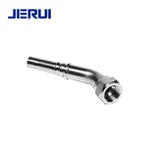
Hydraulic transmission by hydraulic pump, hydraulic control valve, hydraulic actuator (hydraulic cylinder and hydraulic motor, etc.) and hydraulic auxiliary parts (pipeline and accumulator, etc.) composed of hydraulic system. The hydraulic pump converts the mechanical energy into the pressure energy of the liquid, the hydraulic control valve and the hydraulic auxiliary parts control the pressure, flow and flow direction of the hydraulic medium, the hydraulic pump output pressure energy to the actuator, the actuator will convert the liquid pressure energy into mechanical energy to complete the required action.
Working principle The motor drives the hydraulic pump to suck oil from the tank, and the hydraulic pump converts the mechanical energy of the motor into the pressure energy of the liquid. The hydraulic medium enters the left chamber of the hydraulic cylinder through the pipe through the throttle valve and the reversing valve, and pushes the piston to drive the workbench to move to the right. The hydraulic medium discharged from the right chamber of the hydraulic cylinder flows back to the tank through the reversing valve. After reversing the valve, the hydraulic medium enters the right chamber of the hydraulic cylinder, so that the piston moves left and pushes the workbench to move in reverse. Changing the opening of the throttle valve can adjust the speed of the hydraulic cylinder. The pressure of the hydraulic system can be regulated by the relief valve. In the drawing of hydraulic system diagram, in order to simplify the use of prescribed symbols on behalf of hydraulic components, this symbol is called functional symbols.
The basic circuit consists of relevant hydraulic components used to perform a specific function of the typical oil circuit. Any hydraulic transmission system is composed of several basic circuits, each of which has certain control functions. Several basic circuits combined together, according to certain requirements for the direction of motion of the actuator, working pressure and speed control. According to the different control functions, the basic loop is divided into pressure control loop, speed control loop and direction control loop.
Pressure control loop A loop that uses a pressure control valve (see hydraulic control valve) to control the pressure of an entire system or a local area. According to the different functions, the pressure control circuit can be divided into pressure regulation, pressure change, pressure relief and pressure regulation four circuits. (1) pressure regulating circuit: This circuit is adjusted by the relief valve