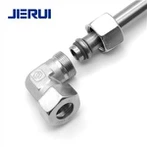
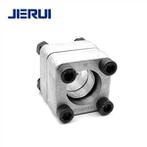
Have you ever heard of "DIN standards"? As one of the world's most influential technical specifications, they act like a universal "product manual," quietly shaping the quality and compatibility of everything from industrial equipment to daily necessities. Today, let's explore what this German-born standard is and why it matters so much for fluid connection products like fittings, flanges, steel pipes, and hose assemblies.
DIN stands for "Deutsches Institut für Normung" (German Institute for Standardization), a set of national standards developed over a century ago. Its core mission is straightforward: to establish unified rules for products and technologies. From the size of a small screw to the pressure resistance of industrial pipelines, DIN standards outline clear requirements for materials, design, performance, and testing. This ensures that products from different manufacturers can "fit together seamlessly" while remaining safe and reliable.
For fluid connection products, DIN standards serve as a "precision guide" with technical details that matter:
· For flanges, they specify the shape of sealing surfaces, the position and number of bolt holes, ensuring flanges from different factories can "tighten securely" without leakage of liquids or gases.
· For fittings and steel pipes, they define dimensional tolerances, wall thickness ranges, and material grades (such as commonly used stainless steel 304 or carbon steel ST37), preventing issues like misalignment or insufficient pressure resistance.
· Even for hose assemblies, DIN standards detail pressure testing methods and service life evaluations, ensuring stable performance in hydraulic, pneumatic, and other applications.
Why focus on DIN standards? Their influence extends far beyond Germany, making them a "common language" in the EU and global industrial sectors. In industries like machinery manufacturing, chemical engineering, municipal engineering, and automotive production-especially when matching European equipment-fluid connection products compliant with DIN standards are essentially holding an "entry ticket." Customers avoid repeated compatibility tests, and businesses reduce technical barriers in trade.
For companies specializing in fittings, flanges, and similar products, mastering DIN standards not only enhances international product compatibility but also strengthens their position in the global supply chain, making them a trusted "reliable partner" for clients worldwide.