


Hey there! As a supplier of 37° flare flanges, I often get asked about how to calculate the pressure drop across these flanges. It's a crucial aspect, especially for those working in hydraulic systems and other industries where these flanges are commonly used. So, let's dive right into it.
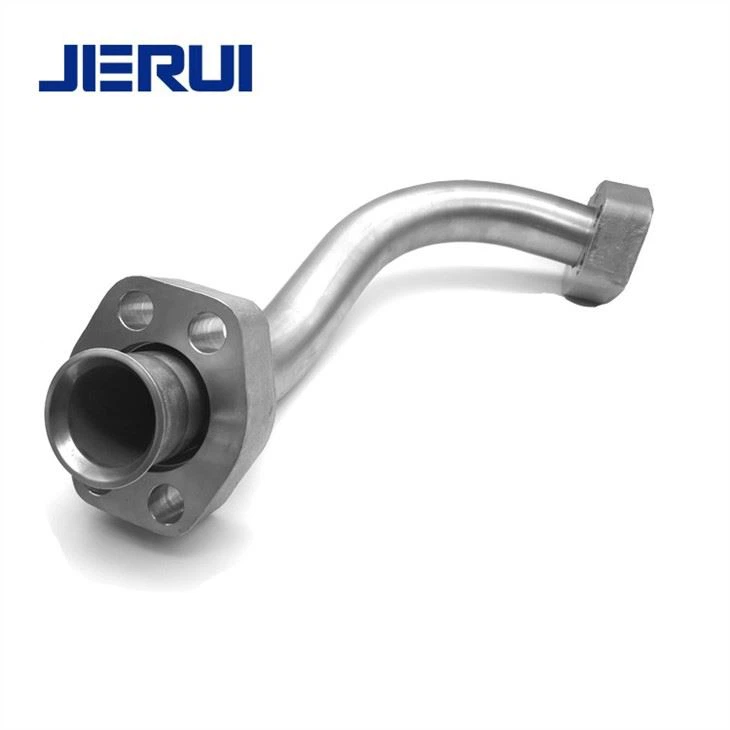
First off, let's understand what a 37° flare flange is. It's a type of flange that has a 37-degree flare angle. These flanges are widely used in hydraulic systems because they provide a reliable and leak-free connection. They're great for high-pressure applications and are known for their durability and ease of installation. You can check out some of our products like the ISO 6164 Flare Flange Flat, Steel Tube Assembly, and Flared Flange on our website.
Now, onto the pressure drop calculation. Pressure drop is basically the decrease in pressure that occurs as a fluid (like oil in a hydraulic system) flows through a pipe or a component, in this case, a 37° flare flange. It's important to calculate this because excessive pressure drop can lead to inefficiencies in the system, reduced performance, and even damage to the components.
The pressure drop across a 37° flare flange depends on several factors. One of the main factors is the flow rate of the fluid. The higher the flow rate, the greater the pressure drop. Think of it like a traffic jam on a highway. If there are a lot of cars (high flow rate) trying to pass through a narrow section (the flange), there's going to be a lot of congestion and a slowdown in the traffic (pressure drop).
Another important factor is the viscosity of the fluid. Viscosity is a measure of how thick or sticky a fluid is. Fluids with high viscosity, like honey, flow more slowly and create more resistance, resulting in a higher pressure drop. On the other hand, fluids with low viscosity, like water, flow more easily and have a lower pressure drop.
The size and geometry of the flange also play a role. A larger flange with a wider passage for the fluid to flow through will generally have a lower pressure drop compared to a smaller flange. The shape of the flare and the internal surface finish of the flange can also affect the pressure drop. A smooth internal surface allows the fluid to flow more freely, reducing the pressure drop.
To calculate the pressure drop across a 37° flare flange, we can use some established equations and methods. One common approach is to use the Darcy-Weisbach equation. This equation relates the pressure drop to the flow rate, pipe length, pipe diameter, fluid viscosity, and a friction factor. However, applying this equation to a flange can be a bit tricky because the flow through a flange is more complex than through a straight pipe.
For a more simplified approach, we can use empirical data and charts. Many manufacturers, including us, provide pressure drop charts for their 37° flare flanges. These charts are based on extensive testing and can give you a good estimate of the pressure drop for different flow rates and fluid viscosities. To use these charts, you simply need to know the flow rate of your fluid and its viscosity, and then find the corresponding pressure drop value on the chart.
Let's walk through an example. Suppose you have a hydraulic system with a 37° flare flange and you're using a fluid with a viscosity of 30 cSt (centistokes) and a flow rate of 20 liters per minute. You look at our pressure drop chart and find that for these conditions, the pressure drop across the flange is approximately 2 bar. This means that as the fluid flows through the flange, the pressure will decrease by 2 bar.
It's important to note that these calculations are estimates, and the actual pressure drop in your system may vary due to factors like installation quality, fluid temperature, and the presence of any contaminants in the fluid. So, it's always a good idea to do some testing and monitoring in your actual system to verify the pressure drop.
Now, if you're in the market for 37° flare flanges or need more information about pressure drop calculations, we're here to help. We've got a wide range of high-quality 37° flare flanges that are designed to meet the needs of various applications. Our team of experts can also assist you with any technical questions you may have. Whether you're a small business or a large industrial operation, we can provide you with the right products and support.

So, don't hesitate to reach out to us if you're interested in purchasing our 37° flare flanges. We're ready to start a conversation and help you find the best solutions for your hydraulic system. Let's work together to ensure your system runs smoothly and efficiently.
References
- Fluid Mechanics textbooks for general principles of pressure drop calculation
- Manufacturer's technical data sheets for 37° flare flanges