


When it comes to hydraulic systems, JIC hose fittings play a crucial role in ensuring reliable and leak - free connections. As a JIC hose fitting supplier, I understand the importance of accurate measurement in the selection and installation of these fittings. In this blog post, I will share some key methods and considerations on how to measure JIC hose fittings properly.
Understanding JIC Hose Fittings
JIC (Joint Industry Council) hose fittings are widely used in hydraulic applications due to their high - pressure resistance and excellent sealing performance. They are designed with a 37 - degree flare seat, which provides a tight seal when mated with a corresponding fitting. The fittings come in various types, such as male inserts, female inserts, elbows, tees, and couplings, each serving a specific purpose in a hydraulic system.
Measuring the Thread Size
One of the primary measurements for JIC hose fittings is the thread size. The thread size of a JIC fitting is typically specified by the nominal size and the thread pitch. To measure the thread size accurately, you can use a thread pitch gauge and a caliper.
First, use the thread pitch gauge to determine the thread pitch. Place the gauge on the threads of the fitting and find the tooth that matches the thread profile exactly. The pitch value indicated on the gauge is the thread pitch of the fitting.

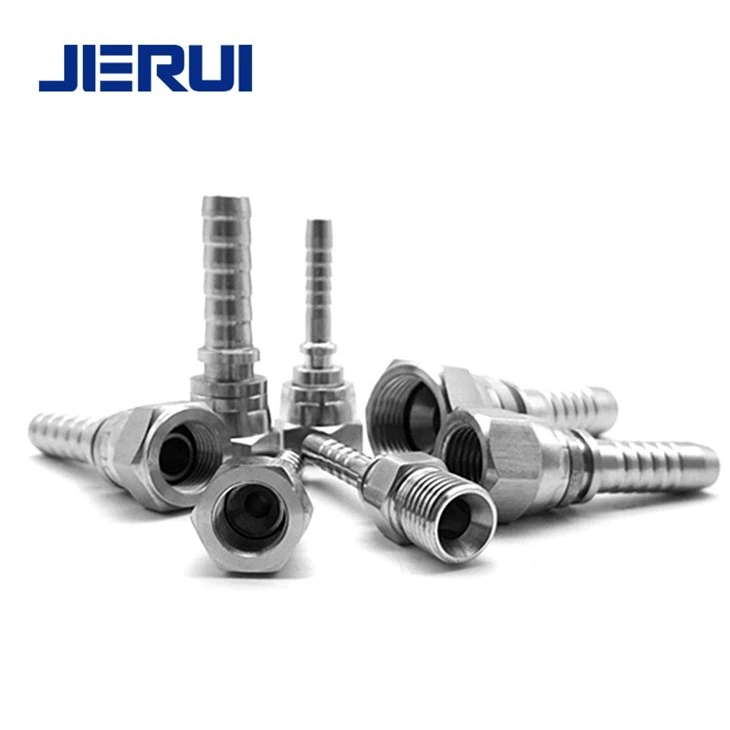
Next, measure the outside diameter (OD) of the male thread or the inside diameter (ID) of the female thread using a caliper. Make sure to measure at the major diameter of the thread. For example, if you are measuring a male JIC fitting, measure the OD at the crest of the threads. Once you have the OD or ID measurement and the thread pitch, you can identify the thread size according to the standard thread charts.
Measuring the Flare Angle
The 37 - degree flare angle is a defining characteristic of JIC hose fittings. To measure the flare angle, you can use a protractor or a specialized angle - measuring tool. Place the measuring tool on the flare surface of the fitting and align it properly. Read the angle value indicated on the tool. A deviation from the standard 37 - degree angle can lead to poor sealing and potential leaks in the hydraulic system.
Measuring the Body Length and O.D.
The body length of a JIC hose fitting is also an important measurement, especially when considering the overall space requirements in a hydraulic system. Use a caliper to measure the length from the end of the fitting to the opposite end, following the centerline of the fitting.
The outside diameter (O.D.) of the fitting body can affect the clearance and compatibility with other components in the system. Measure the O.D. at the widest part of the fitting body using a caliper. This measurement is crucial for ensuring that the fitting can be installed without interference.
Measuring the Seat Diameter
The seat diameter is the diameter of the sealing surface of the JIC fitting. For male fittings, it is the diameter of the flare at the end of the fitting. For female fittings, it is the diameter of the recess where the male flare seats. Measuring the seat diameter accurately is essential for a proper seal. Use a caliper to measure the seat diameter at the appropriate location on the fitting.
Importance of Accurate Measurement
Accurate measurement of JIC hose fittings is vital for several reasons. Firstly, it ensures proper compatibility between different fittings in a hydraulic system. If the measurements are incorrect, the fittings may not mate properly, leading to leaks and reduced system performance.
Secondly, accurate measurement helps in selecting the right fittings for a specific application. Different hydraulic systems have different pressure, flow, and space requirements. By measuring the fittings accurately, you can choose the fittings that can withstand the system pressure and fit within the available space.
Examples of JIC Hose Fittings
As a JIC hose fitting supplier, we offer a wide range of high - quality JIC hose fittings. For example, our 45° JIC 37° Female Insert is designed for applications where a 45 - degree angle connection is required. It provides a reliable seal and is suitable for use in various hydraulic systems.
Our JIC 37° Female Insert is a standard female fitting with a 37 - degree flare seat. It can be used to connect hoses to other components in a hydraulic system, ensuring a leak - free connection.
The JIC 37° Male Insert is the corresponding male fitting, which mates with the female insert to form a tight seal. These fittings are made of high - quality materials to ensure durability and long - term performance.
Tips for Measuring JIC Hose Fittings
- Clean the Fittings: Before measuring, make sure to clean the fittings thoroughly to remove any dirt, debris, or oil. This will ensure accurate measurements.
- Use Quality Measuring Tools: Invest in high - quality measuring tools such as calipers, thread pitch gauges, and protractors. Cheap or inaccurate tools can lead to incorrect measurements.
- Take Multiple Measurements: To increase the accuracy of your measurements, take multiple measurements at different points on the fitting and calculate the average value.
- Refer to Standards: Always refer to the relevant industry standards when measuring JIC hose fittings. Standards such as SAE J514 provide detailed specifications for JIC fittings.
Conclusion
Measuring JIC hose fittings accurately is a critical step in the selection and installation of these fittings in hydraulic systems. By following the methods and tips mentioned above, you can ensure that the fittings you choose are compatible, reliable, and perform well in your application.
As a JIC hose fitting supplier, we are committed to providing high - quality products and technical support. If you have any questions about measuring JIC hose fittings or need assistance in selecting the right fittings for your hydraulic system, please feel free to contact us for further discussion and procurement.
References
- SAE J514 - Standard for JIC Hydraulic Fittings
- Hydraulic Fitting Handbook