


Hey there! As a supplier of hydraulic hose assemblies, I'm super excited to chat with you about the emerging applications for these nifty products. Hydraulic hose assemblies are like the unsung heroes in a bunch of industries, and the ways they're being used are evolving all the time.
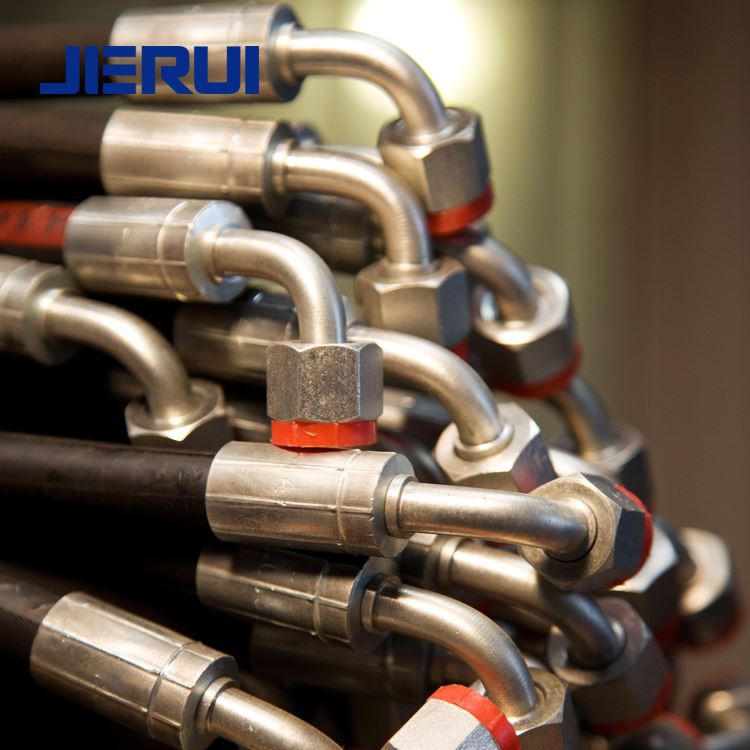
Let's kick things off by understanding what hydraulic hose assemblies are. In simple terms, they're a combo of a hydraulic hose and fittings. The hose is like the pipeline that carries the hydraulic fluid, while the fittings are used to connect the hose to other components in a hydraulic system. They're crucial for making sure that power can be transferred efficiently in these systems.
Now, onto the emerging applications. One of the big areas where we're seeing a lot of growth is in the renewable energy sector. Wind turbines, for example, rely heavily on hydraulic systems to control the pitch of the blades. The blades need to be adjusted constantly to catch the wind at the right angle, and that's where hydraulic hose assemblies come in. They're used to transfer the hydraulic fluid that powers the actuators responsible for blade pitch adjustment. This application requires hoses that can withstand high pressures and extreme environmental conditions, including temperature variations and exposure to the elements. Our hydraulic hose assemblies are designed to meet these demanding requirements, ensuring reliable performance in wind turbine systems.
Another exciting application is in the field of robotics. Robots are becoming more and more common in manufacturing, logistics, and even healthcare. Hydraulic systems can provide the high force and precise control needed for many robotic tasks. For instance, in industrial robots used for heavy lifting and material handling, hydraulic hose assemblies are used to transfer power to the robot's joints and actuators. This allows the robot to move with great strength and accuracy. In the medical field, hydraulic systems are being explored for use in surgical robots, where they can offer more precise control and force feedback compared to other types of actuators. Our hoses are engineered to be flexible and lightweight, which is essential for the smooth operation of these robotic systems.
The construction industry is also finding new uses for hydraulic hose assemblies. With the development of more advanced construction equipment, such as telescopic cranes and excavators, the demand for high-performance hoses is on the rise. These machines require hoses that can handle high pressures and rapid changes in flow rate. For example, in a telescopic crane, hydraulic hose assemblies are used to extend and retract the crane's boom. They need to be able to withstand the high forces generated during the extension and retraction process, as well as the vibrations and movements of the crane. Our hoses are tested to ensure they can handle these challenging conditions, providing long-lasting performance on construction sites.
In the automotive industry, hydraulic hose assemblies are being used in new and innovative ways. One of the emerging trends is the use of hydraulic systems in electric vehicles (EVs). While EVs are known for their electric motors, there are still some components that can benefit from hydraulic power. For example, hydraulic brakes are being considered for use in EVs to provide more reliable and efficient braking performance. Hydraulic hose assemblies are used to connect the brake master cylinder to the wheel cylinders, ensuring that the hydraulic fluid can transfer the braking force effectively. Additionally, hydraulic systems are being explored for use in active suspension systems in EVs, which can improve ride comfort and handling. Our hoses are designed to be compatible with the fluids used in these automotive applications, providing a safe and reliable solution.
Now, let's talk about some of the advantages of using our hydraulic hose assemblies. If you want to learn more about this, you can check out Advantages of Hydraulic Hose Assembly. One of the main advantages is their durability. We use high-quality materials and advanced manufacturing techniques to ensure that our hoses can withstand the toughest conditions. Whether it's high pressures, extreme temperatures, or exposure to chemicals, our hoses are built to last. This means less downtime and lower maintenance costs for our customers.
Another advantage is the flexibility of our hose assemblies. They can be customized to meet the specific requirements of different applications. We can offer different lengths, diameters, and types of fittings to ensure a perfect fit for your hydraulic system. This flexibility allows us to provide solutions for a wide range of industries and applications.
In terms of production, we have a state-of-the-art manufacturing process. To get more details about this, visit Production Details of Hydraulic Hose Assembly. We start with high-quality raw materials and use advanced machinery to produce our hoses. Each hose is carefully inspected and tested to ensure it meets our strict quality standards. We also have a team of experienced engineers who can work with you to design and develop custom hose assemblies that meet your exact needs.
When it comes to quality and reliability, our hydraulic hose assemblies are backed by a range of certificates. You can find more information about these certificates at Certificates of Hydraulic Hose Assembly. These certificates are a testament to the high quality of our products and our commitment to meeting international standards. They give our customers peace of mind knowing that they're getting a product that is safe and reliable.
If you're in the market for hydraulic hose assemblies, I encourage you to get in touch with us. Whether you're in the renewable energy, robotics, construction, automotive, or any other industry, we have the expertise and products to meet your needs. Our team is always ready to help you find the right solution for your hydraulic system. So, don't hesitate to reach out and start a conversation with us. We're looking forward to working with you!
References

- Hydraulic Systems Handbook by E. O. Doebelin
- Industrial Hydraulics: Components, Systems, and Maintenance by John S. Fitch
- The Future of Renewable Energy Technologies by International Renewable Energy Agency