


Hey there! As a supplier of Hydraulic Hose Assembly, I often get asked about the burst pressure of these assemblies. So, I thought I'd take the time to break it down for you in a way that's easy to understand.
First off, let's talk about what burst pressure actually is. In simple terms, the burst pressure of a hydraulic hose assembly is the maximum amount of pressure that the hose can withstand before it ruptures or bursts. It's a crucial factor to consider when choosing a hydraulic hose assembly for your specific application. You wouldn't want a hose that bursts under normal operating conditions, right? That could lead to all sorts of problems, like leaks, equipment damage, and even safety hazards.
Now, how is the burst pressure determined? Well, it's not just a random number. Manufacturers conduct a series of tests to figure out the burst pressure of their hydraulic hose assemblies. These tests are usually done in a controlled environment, where the hose is subjected to increasing pressure until it fails. The pressure at which the hose bursts is then recorded as the burst pressure.
But here's the thing: the burst pressure isn't the same as the working pressure. The working pressure is the maximum pressure that the hose is designed to operate at on a regular basis. It's typically much lower than the burst pressure. This is because there are a lot of factors that can affect the performance of a hydraulic hose assembly in real - world applications. For example, things like temperature, vibration, and the type of fluid being transported can all have an impact on the hose's ability to handle pressure.
As a supplier, we always recommend that our customers choose a hydraulic hose assembly with a burst pressure that is significantly higher than the expected working pressure. A common rule of thumb is to look for a hose with a burst pressure that is at least four times the working pressure. This provides a safety margin and helps ensure that the hose will be able to handle any unexpected pressure spikes that might occur during operation.

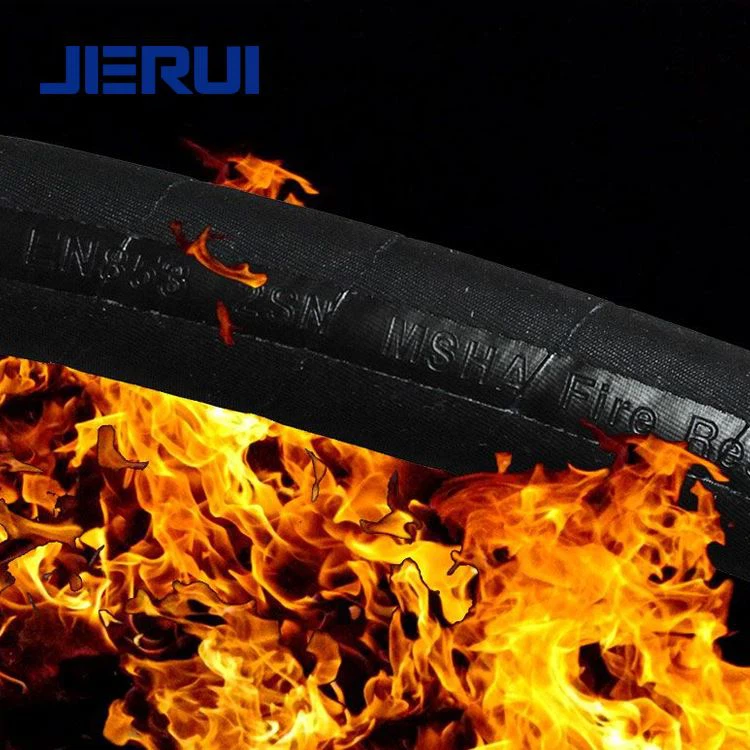
Let's take a closer look at some of the factors that can affect the burst pressure of a hydraulic hose assembly.
Construction of the Hose
The construction of the hydraulic hose plays a huge role in determining its burst pressure. Hoses are typically made up of an inner tube, reinforcement layers, and an outer cover. The inner tube is what comes into contact with the fluid being transported. It needs to be made of a material that is compatible with the fluid and can withstand its chemical properties.
The reinforcement layers are what give the hose its strength. They can be made of materials like braided steel wire, spiral - wound steel wire, or synthetic fibers. The more reinforcement layers a hose has, and the stronger the material of those layers, the higher the burst pressure will be. For example, a hose with multiple layers of high - strength steel wire reinforcement will generally have a much higher burst pressure than a hose with only one layer of synthetic fiber reinforcement.
The outer cover is there to protect the hose from external factors like abrasion, weather, and chemicals. While it doesn't directly affect the burst pressure, a damaged outer cover can lead to damage to the reinforcement layers, which in turn can reduce the burst pressure of the hose.
Fluid Compatibility
As I mentioned earlier, the type of fluid being transported through the hose can have an impact on its burst pressure. Some fluids are more corrosive or abrasive than others. If the inner tube of the hose isn't made of a material that is compatible with the fluid, it can start to break down over time. This can weaken the hose and reduce its burst pressure.
For example, if you're using a hydraulic hose to transport a highly corrosive fluid, you'll need to choose a hose with an inner tube made of a material that can resist corrosion. Otherwise, the fluid could eat away at the inner tube, causing it to thin out and eventually fail at a lower pressure than expected.
Temperature
Temperature is another important factor. Hydraulic hoses are designed to operate within a certain temperature range. If the temperature is too high or too low, it can affect the performance of the hose.
At high temperatures, the materials in the hose can start to degrade. The inner tube may become softer and more prone to damage, and the reinforcement layers may lose some of their strength. This can lead to a reduction in the burst pressure of the hose.
On the other hand, at low temperatures, the materials in the hose can become brittle. The outer cover may crack, and the inner tube may become less flexible. This can also cause the hose to fail at a lower pressure than normal.
So, when choosing a hydraulic hose assembly, it's important to consider the temperature conditions in which it will be operating. Make sure to choose a hose that is rated for the temperature range of your application.
Bend Radius
The bend radius of a hydraulic hose assembly is also important. If a hose is bent too sharply, it can cause stress on the reinforcement layers and the inner tube. This can weaken the hose and reduce its burst pressure.
Manufacturers usually specify a minimum bend radius for their hoses. It's important to follow these guidelines when installing the hose. If you need to make a sharp turn, you can use fittings or elbows to ensure that the hose is bent at a proper angle.
Now, if you're interested in learning more about the Production Details of Hydraulic Hose Assembly, we've got a great resource on our website. It goes into more detail about how our hoses are made, the materials we use, and the quality control measures we have in place.
Also, if you want to know about the different Application Of Hydraulic Hose Assembly, we've got that covered too. Hydraulic hoses are used in a wide variety of industries, from construction and agriculture to manufacturing and transportation. Understanding the specific applications can help you choose the right hose for your needs.
And if you're wondering about the Advantages of Hydraulic Hose Assembly, there are plenty. They offer flexibility, high - pressure capabilities, and the ability to transfer fluids efficiently.
As a supplier, we're committed to providing high - quality hydraulic hose assemblies that meet your specific requirements. We've got a wide range of hoses available, with different burst pressures, working pressures, and sizes. Whether you're looking for a hose for a small - scale project or a large industrial application, we can help.
If you're in the market for a hydraulic hose assembly, don't hesitate to reach out. We can work with you to determine the best hose for your needs, based on factors like the working pressure, fluid type, temperature, and application. Our team of experts is here to answer any questions you might have and to provide you with all the information you need to make an informed decision.
So, if you're ready to take the next step and start using a reliable hydraulic hose assembly for your project, get in touch with us. We're looking forward to working with you and helping you find the perfect solution for your hydraulic needs.
References
- "Hydraulic Hose and Fittings Handbook" by Eaton Corporation
- "Fluid Power Engineering Handbook" by David Crolla