




Hey there! As a supplier of metric hose fittings, I often get asked whether these fittings are suitable for high - speed fluid flow. It's a great question, and today, I'm gonna dive deep into this topic to give you the lowdown.
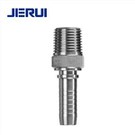
First off, let's understand what metric hose fittings are. They're standardized components used to connect hoses in fluid systems. There are different types, like the Metric Male 24° cone Seat, Metric Female Flat Seat, and Metric Female 24° Cone Seat. Each type has its own design features that play a role in how well it can handle high - speed fluid flow.
When it comes to high - speed fluid flow, there are a few key factors we need to consider. One of the most important ones is pressure. High - speed fluid flow usually means higher pressure in the system. Metric hose fittings are designed to withstand a certain amount of pressure. Most of the well - made metric hose fittings can handle relatively high pressures, which is a plus for high - speed fluid applications.
The material of the metric hose fitting also matters a lot. We commonly use materials like steel, stainless steel, and brass. Steel fittings are strong and can handle high pressures, making them a good choice for high - speed fluid systems. Stainless steel, on the other hand, is corrosion - resistant, which is crucial if the fluid being transported is corrosive. Brass fittings are often used for less demanding applications, but they can still work well in some high - speed scenarios where the pressure isn't extremely high.
Another factor is the internal diameter of the fitting. A larger internal diameter allows the fluid to flow more freely, reducing the resistance and enabling higher - speed flow. Metric hose fittings come in various sizes, and you can choose the one with the appropriate internal diameter based on your specific needs. For high - speed fluid flow, it's generally better to go for a fitting with a larger internal diameter, as long as it's compatible with the rest of your system.
Now, let's talk about the sealing mechanism. A good seal is essential to prevent leaks in a high - speed fluid system. Metric hose fittings use different sealing methods, such as O - rings or cone - seat seals. O - rings are great for creating a tight seal, and they can handle a wide range of pressures and temperatures. Cone - seat seals, like the ones in the Metric Male 24° cone Seat and Metric Female 24° Cone Seat, provide a metal - to - metal seal, which is very reliable and can withstand high pressures.
However, there are also some potential challenges when using metric hose fittings for high - speed fluid flow. One issue is turbulence. When the fluid flows at high speed through the fitting, it can create turbulence, which can lead to increased wear and tear on the fitting and the hose. To minimize turbulence, you need to make sure the fitting has a smooth internal surface and that the connection between the fitting and the hose is properly aligned.
Another challenge is vibration. High - speed fluid flow can cause vibrations in the system, which can loosen the fittings over time. To prevent this, you may need to use additional securing methods, like clamps or brackets, to keep the fittings in place.
In some industries, like the automotive and aerospace industries, high - speed fluid flow is a common requirement. For example, in a car's hydraulic braking system, the fluid needs to flow at high speed to ensure quick and efficient braking. Metric hose fittings are often used in these applications because they offer a good balance of strength, sealing, and compatibility.


In the aerospace industry, where weight and reliability are crucial, metric hose fittings made of lightweight materials like aluminum or titanium can be used. These materials can handle high - speed fluid flow while keeping the overall weight of the system down.
So, are metric hose fittings suitable for high - speed fluid flow? The answer is yes, but with some considerations. You need to choose the right type of fitting based on the pressure, temperature, and fluid characteristics of your system. Make sure the fitting is made of the appropriate material and has the right internal diameter. Pay attention to the sealing mechanism and take steps to minimize turbulence and vibration.
If you're in the market for metric hose fittings for your high - speed fluid flow application, don't hesitate to reach out. We've got a wide range of Metric Male 24° cone Seat, Metric Female Flat Seat, and Metric Female 24° Cone Seat fittings that can meet your specific needs. Let's have a chat about your project and find the perfect solution together.
References
- "Fluid Power Handbook"
- "Hydraulic Systems Design and Maintenance Guide"